Blog

Assorted Links
Is Food Addictive?
The Neurosceptic at Discovermagazine.com took on that question in a recent blog post. The author discusses a recent article arguing that dopamine release in response to food is evidence of food-related addition. Here are the problems with that thinking:
If you view addiction as essentially about reward (pleasure), surely that means that anything pleasurable could also be addictive? Or to put it another way, if you’re saying that addiction is the direct consequence of over-indulgence in a reward, then aren’t you saying that reward itself is ultimately what’s addictive?
and
If everything from food to friends to music are rewarding because they trigger dopamine release, then surely all of those things could be ‘addictive’. If ‘reward’ is essentially monolithic, and the various kinds of rewards differ only in how powerful they are, then everything’s addictive to a degree. The more fun, the more (potentially) addictive. The better something is, the worse it is.
This seems to me to be the logical conclusion of this approach to addiction. Let’s call this (very widespread) approach neuropuritanism.
The funny thing is that this idea – for all its medical, neurobiological, scientific language – actually undermines the concept of addiction as a ‘disease’ and reduces it to what amounts to a moral failing – it casts addiction as over-indulgence. The Sin of Gluttony, if you will.
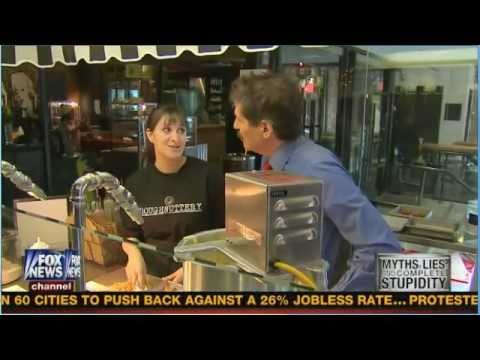
Myths, Lies and Complete Supidity
That was the title of John Stossel's special on Fox News that first aired on Sunday. His first segment was on food, any yours truly appears at about the 2:40 mark.
Bloomberg's soda ban fizzles
That was the title of the editorial I just published at the New York Daily News. The editor added the subtitle "The mayor's paternalism knows no bounds."
Here are a few excerpts:
Tuesday was set to be the last day to legally buy a large sugary soda in the Big Apple. Fortunately, a state judge stepped in late Monday to halt the ban — but not before the mayor’s attitude toward his fellow New Yorkers was exposed.
The leaders of a vibrant city that is home to some of the most diverse and creative people on Earth no longer have faith in the decision-making abilities of their fellow citizens. At least, that is, when it comes to food.and
This schizophrenic paternalism results from an awkward attempt to walk a fine line between a liberal agenda that yields to, even celebrates, freedom of choice and expression when it comes to abortion, sex, speech and drugs — but stops far short when those same freedoms might benefit evil corporations.
It is an odd position that posits us so weak as to fall for anything offered by Ronald McDonald or Tony the Tiger yet so strong to know when to keep a baby alive or which truths to speak to power.I even worked in a little economics:
And exactly how is it that New York City's leaders envision a large sugary soda ban actually benefitting the people who buy Pepsi and Coca-Cola? By removing an alternative some people previously preferred, the ban is simply making people pick a lesser desirable (and thus less satisfying) alternative. Moreover, those alternatives, whether it be fruit juice or beer, may not be any less calorie-dense.
What about soda taxes that may be coming down the pike? Most economists will tell you that making people pay higher prices is akin to reducing their income. Last I checked, no one — particularly not the lower-income people about whom most politicians profess to be concerned — is better off with less money.In conclusion:
Better drink 'em while you still got 'emThe whole thing is online here.